3 Questions to Ask Yourself Before You Commit to Yoga Teacher Training
The run down
Three questions worth sitting with before you put money down:
Have you talked to the person actually leading it? Not the studio. The person.
Do you know what style you will actually learn? A 200-hour certificate is a number, not a curriculum.
Has yoga already changed something for you? This is the one that decides it.
1. Have you talked to the person actually leading it?
Teacher trainings get sold by a website and taught by a human being. For 200 hours, that human being's voice is going to be in your head. How they explain a pose. What they think yoga is actually for. Whether they meet a nervous question with patience or with a sales pitch.
You cannot get any of that from a landing page.
So ask for a real conversation before you commit to anything. A good one should leave you knowing who teaches which parts of the program, how long they have been teaching them, and what happens when you hit a wall in week six. If the answer to who is leading it turns out to be a rotating cast you will meet on day one, that tells you something too. Not necessarily something bad. Just something worth knowing before you decide.
The tell you are listening for is simple. Does this person seem more interested in whether the training is right for you, or in whether you sign up?
2. Do you know what style you will actually learn?
Two hundred hours is Yoga Alliance's requirement. It is not a curriculum. Two schools can hand you the same certificate and teach you almost entirely different things.
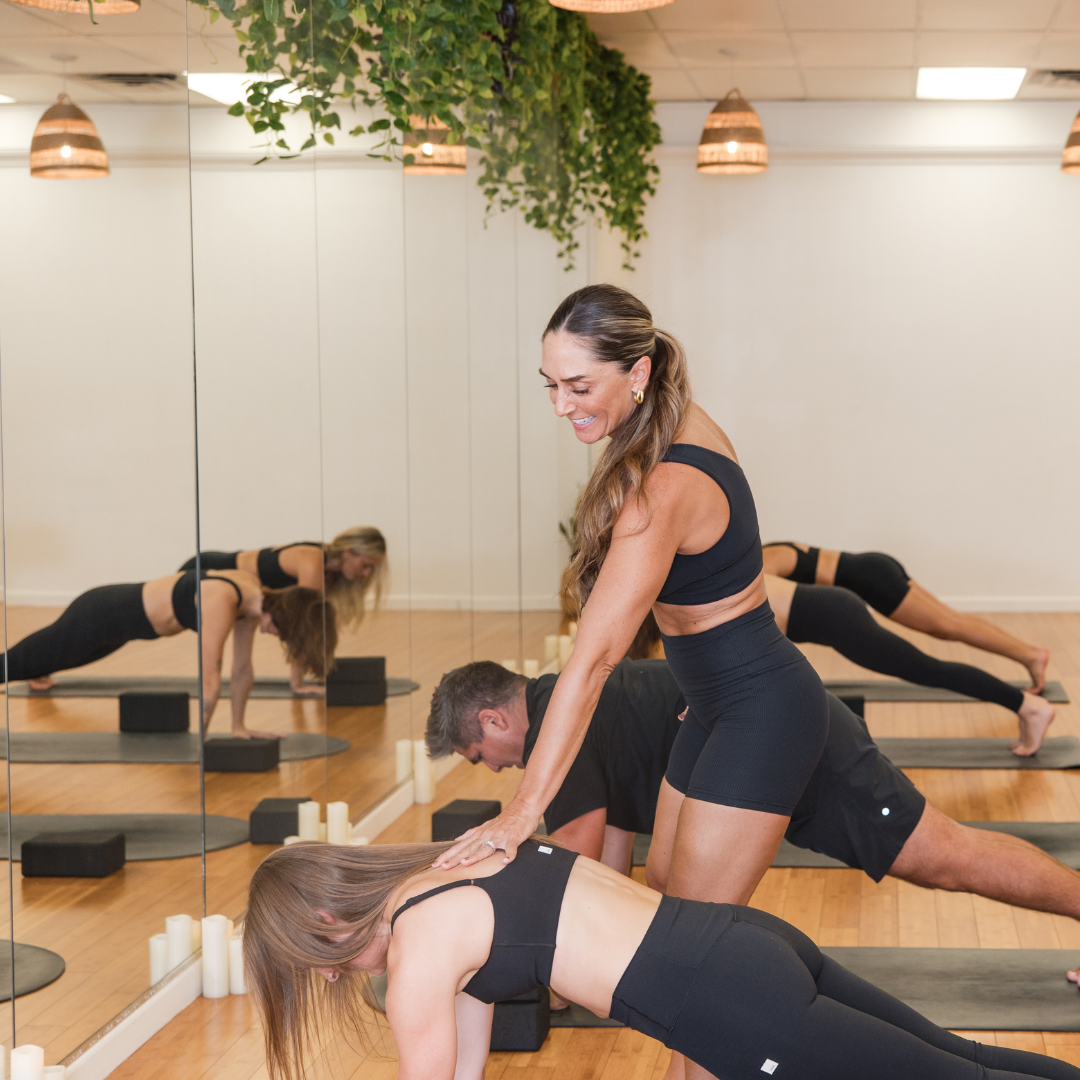
Some trainings are built around one fixed sequence you memorize. Some are alignment-based, which means you learn the mechanics of a pose and how to adjust it for whoever is actually in front of you. Some spend most of their hours in philosophy and history. Some barely touch it. Some are heated, some are not.
None of those are wrong. They just decide what you can actually do when it is over.
The real question underneath is what you want on the other side. If you want to lead classes for real bodies, with real injuries and real hips, you want a program that spends serious time on alignment and props rather than one that hands you a script. If you mostly want to understand your own practice more deeply, you want somewhere that goes into breathwork, anatomy, and philosophy instead of rushing you toward teaching.
Ask what a graduate can teach on day one. The answer should be specific.
3. Has yoga already changed something for you?
This is the one that actually decides it, and it is the one that gets skipped, because it does not sound practical.
But teacher training is not a certification you pick up because it seems like a good idea. It is 200 hours of studying one thing closely, and the people who finish are almost never the ones who walked in the most flexible. They are the ones the practice had already gotten to.
So be honest with yourself. Has yoga changed how you get through a hard week? How you talk to yourself? What you notice in your own body? Did it show up at a point when you needed something, and stay?
If the answer is yes, you already have the thing that carries people through the hard middle of a training, which is a real reason to be there. If the answer is not yet, that is worth knowing too. There is no rush. Practice through another season and ask yourself again.
Notice what this question is not asking. It is not asking whether you want to teach. Plenty of people go through training with no plan to ever lead a class, and that is a completely legitimate reason to be in the room. We wrote about that here.
What a training actually asks of you
The three questions above are the hard part. The logistics are usually easier than people expect, and worth knowing before you talk yourself out of it.
Our 200-hour training is hybrid. Lectures and flow classes happen live over Zoom, with an in-person weekend here in Sarasota. All of our Zoom sessions are recorded. That is why we have had students join from all over the US, and why people with full-time jobs can do this without rearranging their entire fall.
What it does ask for is consistency. There are weekly assignments, pre-recorded material to work through on your own time, and a practice you keep up outside of class. Two hundred hours is not a weekend.
The details for the November 2026 cohort:
Starts: Beginning of November
Weekly schedule: Twice weekly Zoom sessions
Tuition info: Schedule a call with Nichole to learn more
Yoga teacher training in Sarasota
Bloom Yoga Collective is a Registered Yoga School with Yoga Alliance, and our 200-hour training is led by Nichole, who owns the studio and teaches the program herself.
What you learn here is alignment-based vinyasa. You will come out able to teach a full foundational flow, adjust it for the body in front of you, and speak to pranayama, meditation, Ayurveda, and the philosophy underneath all of it. Not a script. The reasoning.
If you have been circling this for a while, the next step is not a decision. It is a conversation.
Book a call with Nichole | 200-hour training | 300-hour training | Class schedule